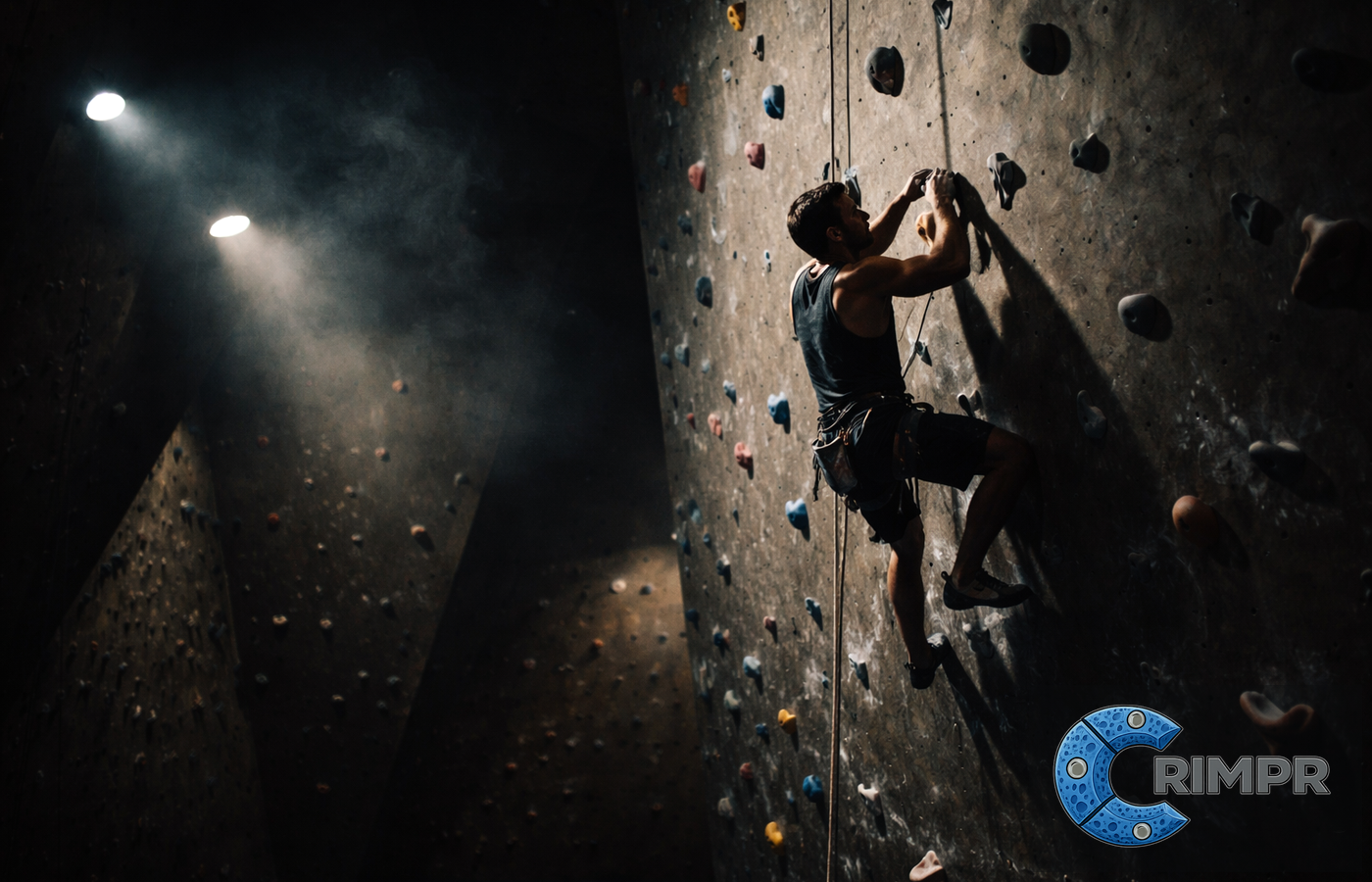
I found climbing a few years after COVID, when I was looking for something to do and decided to give my local wall a try.
I connected with it almost straight away.
Within a few weeks, I had done a learn-to-climb course and climbing started becoming part of my week. At first, one of the challenges was simple: I did not have a regular climbing partner. I was climbing on my own and trying to get other people to come along. After a few attempts, I finally found someone at work who loved it too, and from there it became our weekly routine — work to wall.
Then climbing became something even bigger when my daughter started climbing as part of her PE GCSE.
At first, heights were a real barrier for her. It took 26 visits to the wall before she finally got to the top. One visit at a time, one step at a time, she worked through it. At one stage we were at the wall four times a week. As she became stronger, we ended up doing a learn-to-lead course. I originally did it so I could belay her, but in the back of my mind I think I always wanted to lead as well.
When her GCSE finished, she stopped climbing regularly and only came every now and then. That changed the rhythm again, and I found myself needing to build that part of my climbing life back up. Thankfully, I met new friends at the wall — climbers stronger than me, climbing 7a and 7b on top rope and lead. Being around them pushed me along. I had been climbing around 6a, and over time I have managed 6b and 6b+.
Now my own edge is clear. I want to start leading properly, and I want to reach 7a. Whether I get there or not, I know that is the edge I am working toward.
I’m a mechanic by trade, and I have never been someone naturally drawn to sport or exercise. Climbing is the first thing I have ever found that made me feel connected enough to want to keep moving, keep training, and keep improving.
What hooked me most was the problem solving.
That is a big part of how my mind works anyway. In my work, I solve problems. In climbing, I found that same pull. A route is a problem. A move is a problem. Repeating something and changing one small detail is problem solving. Unlocking one move so you can move onto the next is problem solving.
That is what I love.
But climbing has also become one of the best things I have ever done for my mental health.
Not just because it is exercise, but because it works your head in the right way.
Every route is a puzzle. Where your hands go. Where your feet need to be. How you move your body. When to slow down. When to commit. When to reset. Sometimes success comes from one small change — a different foot placement, a calmer breath, or a better sequence.
It teaches calm under pressure too.
When you are halfway up a wall and everything in you wants to rush, climbing teaches you to breathe, focus, and take one good move at a time. It brings you back into the moment. It helps stop your mind from running away with itself. That has helped me massively when work gets heavy.
One of the parts that surprised me most is trust.
Climbing is built on trust. You literally put your safety in someone else’s hands. You have to communicate clearly, then accept that you cannot control everything. You have to trust your belayer to do their job properly.
It teaches you that it is okay to rely on other people.
It is okay to ask for support.
It is okay to let someone else hold the rope sometimes.
I think that matters more than people realise.
Climbing is also something you can keep with you for life. It is not just for the young or the naturally sporty. It can grow with you. Some days it is there for the challenge. Some days it is there for the reset. Some days it is just there to bring you back to yourself.
That is a big part of what climbing has become for me.
A reset button.
And I know everyone’s reset looks different. For some people it is the gym. For some it is walking, fishing, music, gaming, running, or family time. The important thing is having something that brings you back to yourself.
For me, climbing does that.
That is where CRIMPR came from.
The idea that everyone’s edge is different.
For some people it is a grade.
For some it is a fear.
For some it is confidence.
For some it is trust.
For some it is just turning up again.
CRIMPR is built around one real climbing journey.